
For years, the technology industry has watched Dell Technologies with a mix of nostalgia and unease. Once the undisputed king of personal computing, Dell gradually drifted away from the hardware excellence that built its reputation. What was once an engineering-driven company became increasingly defined by process, portfolio management, and cautious decision-making.
The recent move to place Jeff Clarke, Dell’s vice chairman and chief operating officer, in direct control of the PC business is both an admission of failure and a calculated bet on renewal. As we move into 2026, Clarke isn’t merely inheriting a struggling division—he is attempting to resurrect a brand identity buried under bureaucracy, branding confusion, and missed opportunities.
This is the story of Dell’s long slide, the scale of Clarke’s challenge, and what a real turnaround would require. We’ll close with my Product of the Week: HP’s nearly invisible PC, which quietly demonstrates exactly what Dell has been missing.
The Long Slide: Distraction, Caution, and Abandoned Innovation
Dell’s decline did not happen overnight. The turning point was the EMC acquisition—one of the largest and most complex mergers in tech history. Strategically, it made sense. Financially, it paid off. But culturally, it drained oxygen from Dell’s core PC business.
As leadership attention shifted toward enterprise infrastructure, storage, and cloud services, the PC division was left on autopilot. During this period, HP re-established itself as a design-forward PC company, while Lenovo aggressively innovated across form factors, thermals, and business devices. Dell, by contrast, played defense.
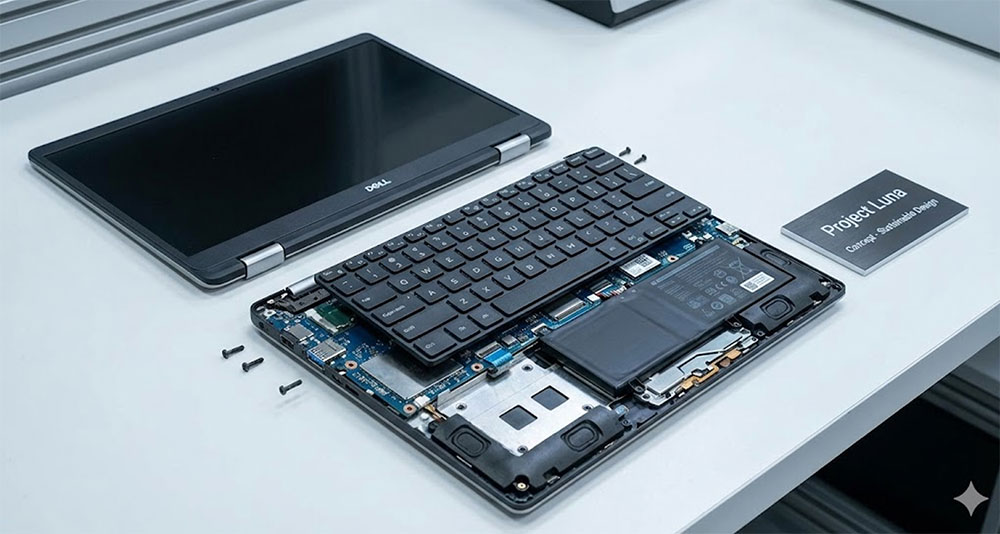
The most frustrating casualty of this era was Dell’s aversion to risk. Project Luna should have been a defining moment. The concept—modular, sustainable, repairable PCs—was visionary and timely, addressing right-to-repair, environmental pressure, and customer demand for longevity.
Instead of committing, Dell hesitated. Project Luna remained a concept, not a flagship product. While Dell stalled, competitors moved forward, erasing what could have been Dell’s clearest differentiator.
The XPS Mistake: Killing the Halo
Dell’s most damaging decision came in 2025 with the elimination of the XPS brand. XPS wasn’t just a product line—it was Dell’s engineering halo, representing premium build quality, thermal ambition, and design leadership.
Replacing XPS with a bland “Pro / Plus / Premium” naming scheme was not simplification; it was self-erasure. Customers didn’t just lose a familiar name—they lost confidence that Dell still believed in aspirational hardware.
In technology, halo products matter. Apple understands this. HP understands this. Lenovo understands this. Dell, for reasons that still defy logic, chose to abandon one of the strongest premium brands in the PC industry.
Leadership Drift: Retirement in Place
Much of Dell’s stagnation can be traced to the top. Michael Dell remains an iconic figure, but in recent years his role has increasingly resembled “retirement in place.”
His focus appears centered on portfolio strategy, financial engineering, and philanthropy—not the obsessive pursuit of better machines. Without that founder-driven intensity, the PC organization slipped into a culture of avoidance rather than accountability.
Instead of fixing thermal constraints, battery inefficiencies, and stale industrial design, Dell leaned on marketing refreshes and rebrands. Problems were managed, not solved—and over time, that mindset hollowed out the product line.
Windows 11, AI PCs, and a Missed Moment
Industry headwinds didn’t help—but Dell was uniquely unprepared for them.
Windows 11 adoption has lagged significantly, trailing Windows 10 by roughly 10–12 percentage points at comparable stages. At the same time, Microsoft’s aggressive push into AI PCs created confusion rather than excitement for mainstream buyers.
Dell leaned heavily into AI messaging without delivering clear, user-visible benefits. The result was a futuristic narrative paired with uninspired hardware.
AI doesn’t sell PCs by itself.
Great PCs do.
Jeff Clarke’s Challenge: Culture Before Products
Jeff Clarke’s task is enormous, but not impossible. The turnaround won’t start with processors or chassis—it must begin with culture.
Dell needs:
- A return to engineering-led decision-making
- The revival of a true halo product
- Clear brand architecture that means something
- A willingness to take calculated risks again
Most importantly, Dell must once again care deeply about making the best PCs, not just the safest ones.
Product of the Week: HP’s Nearly Invisible PC
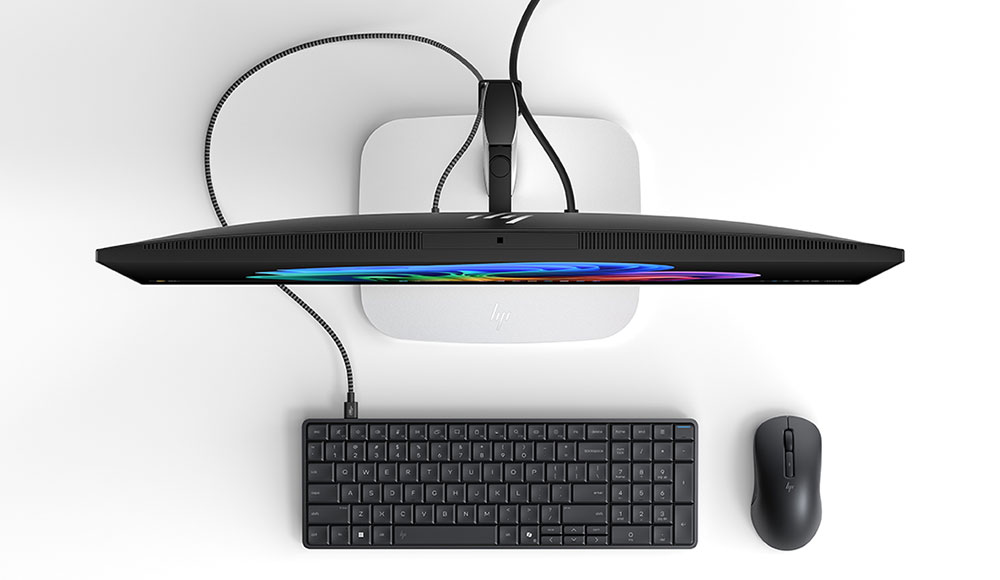
While Dell searches for its identity, HP has quietly executed one of the most elegant PC designs in years.
HP’s nearly invisible PC—compact, silent, and unobtrusive—perfectly reflects modern computing needs. It disappears into the workspace, sips power, runs cool, and prioritizes reliability over gimmicks.
That’s the lesson Dell needs to relearn.
Great PCs don’t shout.
They earn loyalty by being excellent.
#Engineering #ProductDesign #SustainableTech #TechOpinion #IndustryInsights #TechCommentary #PCInnovation #HardwareDesign #LaptopTechnology #Engineering #ProductDesign #SustainableTech #Carrerbook #Anslation